
Peak Songwriting & Touring
After Pigpen
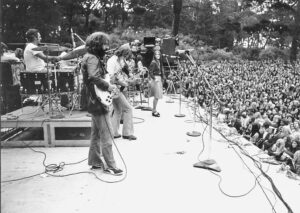
Ten weeks after Pigpen’s last show, the Grateful Dead played a field in Veneta, Oregon. The August 27, 1972 show was a benefit for the Springfield Creamery, a yogurt business run by Ken Kesey’s brother Chuck and his wife Sue, and about 20,000 people came out in heat close to 100 degrees. The band played three sets, including a 31-minute “Dark Star.” “We’d sure like to thank the Springfield Creamery for making it possible for us to play out here,” Phil Lesh told the crowd. The show was filmed, and in 2013 it was finally released as the film and album Sunshine Daydream.
This was a different band from the one that had left for Europe that spring. Pigpen had been the Dead’s frontman since the jug band days, and without his blues the sets leaned on Garcia and Hunter’s songs and Bob Weir’s rockers and cowboy songs. Keith Godchaux had played Bach and Mozart as a child and jazz and cocktail piano as a teenager. Now he was the only keyboard player, and his piano filled the space between the two guitars. “He’s the guy that thought that he was the right man for the job,” Garcia said. “And he came around, and we tried playing with him, and it seemed to work out real well.” Donna Jean Godchaux, a former Muscle Shoals session singer, sang harmony with Weir and Garcia. Bill Kreutzmann had been the only drummer since Mickey Hart left in 1971.
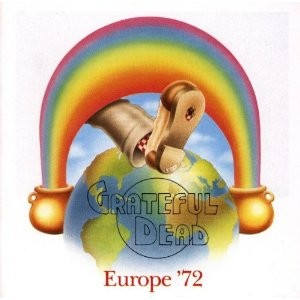
Europe ’72, the triple live album from the spring tour, came out in November 1972. It reached number 24 and eventually sold two million copies. Pigpen died on March 8, 1973, at 27.
A New Songbook
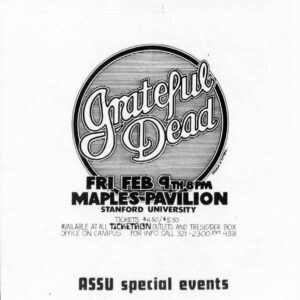
On February 9, 1973, at Maples Pavilion on the Stanford campus, the band played seven new songs in a single night: “Eyes of the World,” “China Doll,” “Here Comes Sunshine,” “Row Jimmy,” “They Love Each Other,” “Loose Lucy” and “Wave That Flag,” an early version of “U.S. Blues.” It was the biggest batch of new Garcia and Hunter songs since American Beauty. “Eyes of the World” rode a light, jazzy groove, and Garcia said it “wanted a samba feel… It was kind of a Brazilian thing.” Hunter’s lyric for it reached for something larger. “Have you had that flash?” he asked later. “Of looking through everyone’s eyes at once?” “China Doll” was the opposite, a quiet ballad Hunter had once called “The Suicide Song.” “Mississippi Half-Step Uptown Toodeloo” had come in the summer before, and “Stella Blue,” first played at Pigpen’s final show, became one of Garcia’s great late-night ballads.
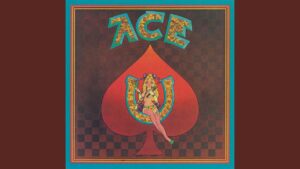
Weir had new material too. “Weather Report Suite” put a short instrumental prelude ahead of a ballad Weir wrote with the folk singer Eric Andersen and “Let It Grow,” a long Weir and John Perry Barlow song built for jamming. Weir and Barlow’s “Cassidy,” first heard on Weir’s 1972 solo album Ace, entered the Dead’s sets in 1974.
Featured Songs
Grateful Dead Records
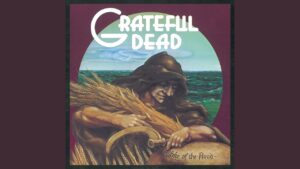
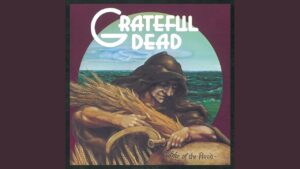
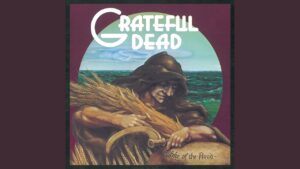
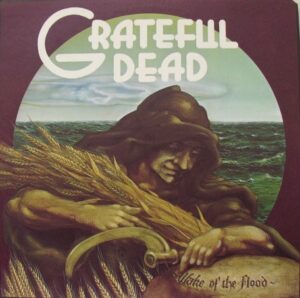
In the spring of 1973 the band went into the record business for itself. Their Warner Bros. contract was up, and Ron Rakow, who had lent the band money for equipment, worked out a plan with Garcia to put out their records independently. That April the band approved it and formed two labels: Grateful Dead Records for the band, and Round Records for solo projects. The first album was Wake of the Flood, recorded in August 1973 at the Record Plant in Sausalito. It came out on October 15 with “Eyes of the World,” “Here Comes Sunshine,” “Row Jimmy,” “Stella Blue,” “Mississippi Half-Step,” Keith’s “Let Me Sing Your Blues Away” and “Weather Report Suite.” It reached number 18. Warner Bros. kept releasing old material: History of the Grateful Dead, Vol. 1 (Bear’s Choice), taken from 1970 Fillmore East tapes, came out in July 1973. The hits compilation Skeletons from the Closet followed in February 1974. It became the band’s best-selling album.
Summer Jam
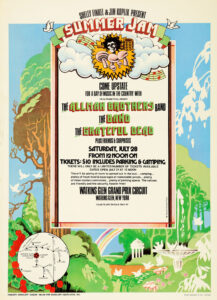
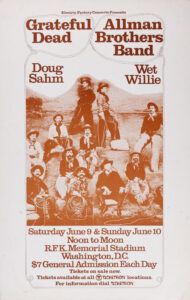
By 1973 the Dead were playing stadiums. On June 10 they shared RFK Stadium in Washington with the Allman Brothers Band. Dickey Betts and Butch Trucks joined them for part of the last set, and the band played for more than four and a half hours, the longest show of its career. Seven weeks later the same two bands and The Band played the Summer Jam at the Watkins Glen Grand Prix Raceway in upstate New York. About 150,000 tickets were sold, and an estimated 600,000 people came, one of the largest crowds in rock history. The night before, the Dead played a long soundcheck for the early crowd, and a 19-minute jam from it was later released on the 1999 box set So Many Roads.
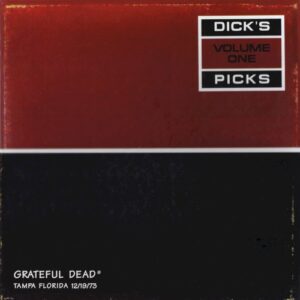
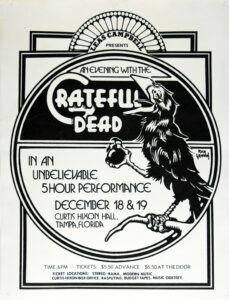
The three Winterland nights in November 1973 were later released complete. At the Boston Music Hall on November 30 the band showed up late, and Lesh explained, “You see, we thought we were supposed to be here tomorrow night.” On December 19 in Tampa they played a show that launched the Dick’s Picks archival series twenty years later.
The Wall of Sound
Since 1966 Owsley Stanley had been building better sound systems for the band. By 1974 the result was the Wall of Sound, designed by Owsley with Dan Healy, Mark Raizene and Alembic’s Ron Wickersham, Rick Turner and John Curl. It stood behind the band, about three stories high, with roughly 600 speakers and somewhere between 26,000 and 28,800 watts of amplification, depending on the source. The Wall was really six separate sound systems. Vocals, Garcia’s guitar, Weir’s guitar, Keith’s piano and the drums each had their own speakers. The bass ran through a set of its own, with each of Lesh’s strings in a separate channel. Because it stood behind the band, there were no monitors, and the band heard what the audience heard. To keep the vocal microphones from feeding back, the engineers used pairs of mics wired out of phase, so the sound from the speakers canceled out and only the singer’s voice came through. “With the Wall, there was so much power available that the musicians generally turned things up to 2,” historian Dennis McNally wrote in A Long Strange Trip.
The Wall made its debut at the Cow Palace in Daly City on March 23, 1974, at a show billed as “The Sound Test.” That night the band also played “Scarlet Begonias” and “Cassidy” for the first time. The Wall weighed about 75 tons, and a contemporary newspaper put its cost at around $200,000. The crew used three sets of staging, so one could go up in the next city while the band played on another and a third came down. At 23 shows that summer and fall, Phil Lesh and the electronic composer Ned Lagin played “Seastones,” an electronic piece, between the band’s sets.
From the Mars Hotel
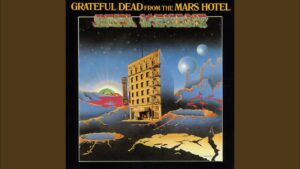
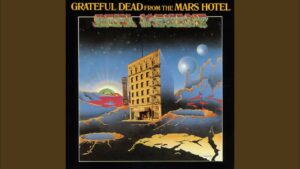
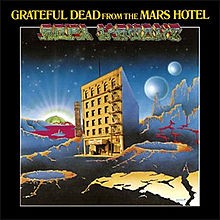
The band recorded its second Grateful Dead Records album at CBS Studios in San Francisco in March and April 1974, producing it themselves with engineer Roy Segal. “Scarlet Begonias” was the first song they tracked. The title came from a run-down hotel at 192 Fourth Street near the studio. The working title was “Ugly Roomers,” Kreutzmann said: “a self-deprecating dig at ourselves, but we changed it to ‘rumors’ out of respect to the boarders at the hotel.”
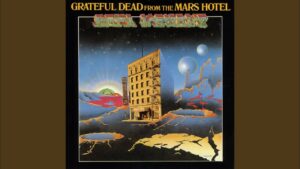
From the Mars Hotel came out on June 27, 1974, and reached number 16. Garcia and Hunter supplied “U.S. Blues,” “China Doll,” “Loose Lucy,” “Scarlet Begonias” and “Ship of Fools.” Weir and Barlow wrote “Money Money,” and Lesh wrote “Unbroken Chain” and “Pride of Cucamonga” with his friend Bobby Petersen. “Unbroken Chain” became a fan favorite even though the band never played it live until 1995.
The Longest Jams
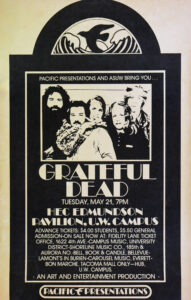
With the Wall behind them, the band stretched further than ever. On May 21 at the University of Washington in Seattle, “Playing in the Band” ran 46 minutes, the longest continuous song the band ever recorded. On June 18 in Louisville and August 6 at Roosevelt Stadium in Jersey City, the jams moved from Weather Report Suite and “Eyes of the World” into spacey free sections and back. In September the band shipped the Wall to Europe for seven shows in London, Munich, Dijon and Paris.
The members were busier than ever outside the band. In 1973 Garcia played banjo in Old & In the Way, a bluegrass band with David Grisman, Peter Rowan, Vassar Clements and John Kahn. He also played club dates with organist Merl Saunders, recorded live at the Keystone in Berkeley that July. In 1974 Round Records released Garcia’s covers album Garcia (known as Compliments of Garcia) and Hunter’s first solo album, Tales of the Great Rum Runners. Mickey Hart, out of the band since 1971, was recording at his ranch in Novato.
Featured Shows
The Last One
By the fall of 1974 the band was working to pay for its own operation. The Wall needed four semi-trailers and a crew of twenty-one, and the organization had grown to dozens of people on salary. “Too many gigs, too much money spent, and too many people trying to get backstage all added up to a potentially explosive broth,” Lesh wrote. Kreutzmann put it another way: “By the end of 1974, Jerry was done being that kind of hero. He was ready for a change of scene.”
The band decided to stop touring. They played five final nights at Winterland in San Francisco, October 16 to 20, 1974, and had them filmed for a concert movie that Garcia would spend the next two and a half years editing. The last night was billed as “The Last One.” On October 18 the band played “Dark Star” for the last time until 1978. On October 20, Mickey Hart walked onstage at the start of the second set and played with the band for the first time since February 1971. The Wall of Sound came down after that run and never went up again. What the band did with its time off is the story of the Grateful Dead’s Hiatus.