
The Coma
On July 10, 1986, three days after the last of the summer stadium dates, Jerry Garcia went into a diabetic coma. He had been overweight, dehydrated and using drugs again on the tour. He was unconscious for about five days, and when he woke up he couldn’t play the guitar. “They had to teach me how to walk again, and playing the guitar, I had to do that stuff all over again,” he told Guitar World the next year. “But it was all there. I mean the bits and pieces where all there, but I didn’t have ready access to all of them.”
His old friend Merl Saunders, the keyboard player he had worked with in the early 1970s, sat with him through the summer and helped him find it. “I’d take him for a walk,” Saunders said. “We’d take 10 steps, then take 10 steps back.” Garcia had to learn chords again, and the first song he wanted to relearn was “My Funny Valentine.” Biographer Blair Jackson wrote that it was “Merl more than anyone else, who literally sat by Jerry’s side and helped him regain his musical gifts.”
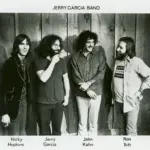
The Dead canceled its fall dates. On October 4, 1986, Garcia played his first show back, with the Jerry Garcia Band at The Stone in San Francisco. Its first two shows sold out within 90 minutes. Bill Kreutzmann and Brent Mydland formed a side band of their own, Go Ahead, which began playing clubs in December.
December 15, 1986
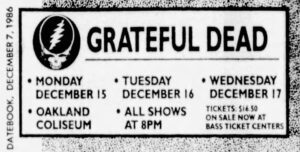
The Grateful Dead returned on December 15 at the Oakland-Alameda County Coliseum Arena. Garcia had lost weight and looked healthy, and when the band opened with “Touch of Grey,” a song about getting by that suddenly sounded like Garcia’s own story, the crowd went wild. Later that night the band debuted two new songs, Garcia and Hunter’s “When Push Comes to Shove” and “Black Muddy River,” a quiet song about getting older that would be in the encore of the band’s last show nine years later. The Neville Brothers sat in on the next two nights.
In the Dark
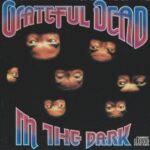
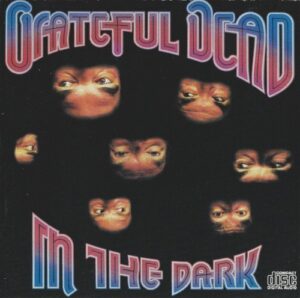
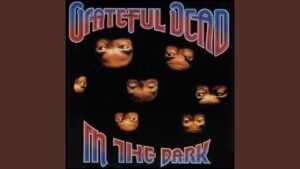
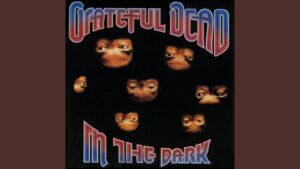
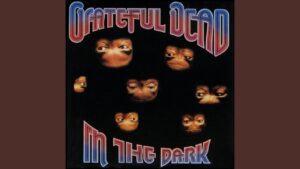
In January 1987 the band set up in the empty Marin Veterans Memorial Auditorium in San Rafael and recorded a new album the way it played onstage. “We rented it, moved out stuff in and set it up just as though we were playing live,” Garcia said. Garcia and John Cutler produced it. In the Dark came out on July 6, 1987, and reached No. 6, the band’s only Top 10 album. It went double platinum.
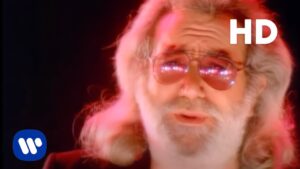
“Touch of Grey” had been in the band’s sets since 1982. Now it went to No. 9 on the Billboard Hot 100, the band’s only Top 40 single. Gary Gutierrez, who had animated the opening of The Grateful Dead Movie, directed a video with life-size skeleton puppets dressed as the band, filmed after a show at Laguna Seca. MTV started playing it on June 19 and kept it in heavy rotation. “We haven’t seen this much response to a new release since The Joshua Tree,” said Doug Clifton of KBCO in Boulder, Colorado. “Throwing Stones” and “Hell in a Bucket” got videos too.
Dylan and the Dead
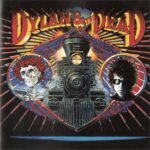
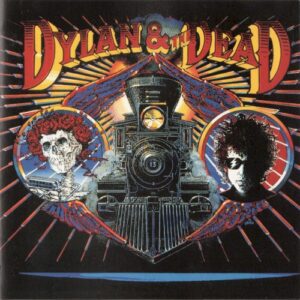
In July 1987 the Dead played six stadium shows with Bob Dylan, playing their own set and then backing him. The tour opened in Foxboro, Massachusetts, on July 4 and included Giants Stadium in New Jersey on July 12. Dylan later wrote that he “had no feelings for any of those songs.” Garcia remembered being in “the weird position of teaching Dylan his own songs.” A live album, Dylan & the Dead, came out in February 1989 and drew some of the worst reviews either act ever got.
That fall Garcia played a run of shows at the Lunt-Fontanne Theatre on Broadway, opening each night with an acoustic band of old friends, including David Nelson and Sandy Rothman, before the electric Jerry Garcia Band played. The acoustic band’s album, Almost Acoustic, came out in 1988. The band also released So Far, a long-form video Garcia co-directed with Len Dell’Amico.
A Bigger Crowd
The hit changed who came to the shows. “From that point on, the number of people in the parking lots tripled,” Steve Marcus, the band’s ticket chief, told Blair Jackson. Publicist Dennis McNally remembered going “from having 500 or 1,000 people without tickets at a show” to many times that. In June 1987 Garcia was already worried: “I don’t think we can play that many more shows, so this represents a problem.”
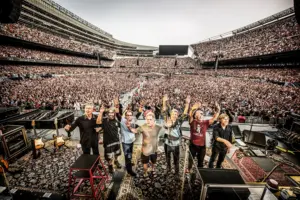
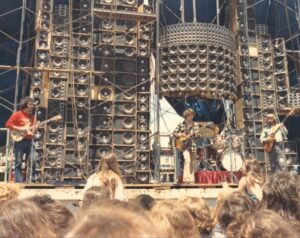
From 1987 on, the Dead played stadiums every summer, and arenas in the spring and fall. In September 1988 they closed a nine-night run at Madison Square Garden with a benefit for rainforest groups. Daryl Hall and John Oates, Suzanne Vega, Mick Taylor, Babatunde Olatunji and Bruce Hornsby, who had first sat in with the band that June, all joined them.
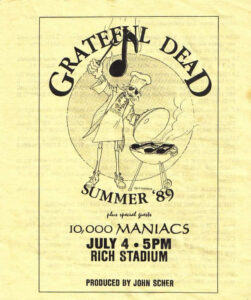
The pressure grew in 1989. In April, at the Civic Arena in Pittsburgh, gate-crashers threw rocks and bottles at police and hundreds of people were arrested. That summer a Washington council member tried to stop the Dead’s shows at RFK Stadium. “I really feel that our audience is getting a bad rap that it doesn’t deserve,” Garcia told Relix. The band began appealing to fans to behave outside the shows.
Built to Last and the MIDI Years
In 1987 the band hired Bob Bralove, a specialist in electronic instruments, and his first job was updating Brent’s rig. By early 1989 Garcia, Weir and Lesh all had MIDI pickups on their instruments, which let them trigger synthesizer sounds while they played. “If you produce a sound that’s convincingly like, say, a French horn, you start to think French horn ideas,” Garcia said. The drummers added electronic sounds too, and “Space” grew stranger.
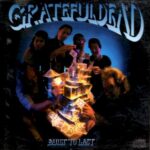
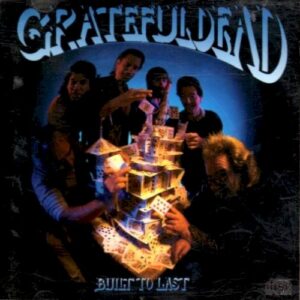
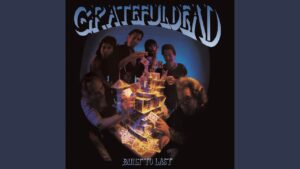
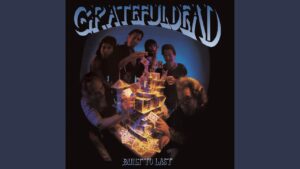
The band spent much of 1989 making Built to Last, its 13th and final studio album. Brent wrote four of its songs with John Perry Barlow, including “Blow Away” and “I Will Take You Home,” a lullaby for his daughters. Garcia and Hunter contributed “Foolish Heart,” the title song and “Standing on the Moon,” which Garcia called “one of those perfect songs.” Weir brought “Victim or the Crime” and “Picasso Moon.” It came out on Halloween 1989 and reached No. 27.
Featured Songs
Formerly the Warlocks
In October 1989 the band booked two nights at Hampton Coliseum in Virginia under the name “Formerly the Warlocks,” the band’s name in 1965. The shows were announced only about ten days ahead, with tickets sold only through local outlets, to keep the crowds outside small. On October 8 the band opened the second set with “Help on the Way” > “Slipknot!” for the first time in four years. On October 9 it played “Dark Star” for the first time since 1984, and closed with “Attics of My Life,” unplayed since 1972. Two weeks earlier, at Shoreline, it had brought back “Death Don’t Have No Mercy” after 19 years.
Spring 1990
The band’s spring 1990 tour is one of its most celebrated. On March 29 at the Nassau Coliseum on Long Island, the saxophonist Branford Marsalis joined for “Bird Song” at the end of the first set and stayed through a second set that included “Dark Star,” and the encore. “Jerry and I hit it off,” Marsalis said later. “He noticed that a lot of things I was playing were based on things I heard him playing. He was grinning.”
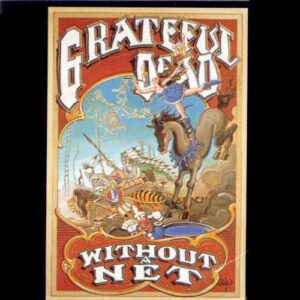
Recordings from that tour and the fall of 1989 became Without a Net, a double live album released in September 1990. The “Eyes of the World” with Marsalis was on it.
Brent
Brent Mydland had become one of the band’s lead voices, with his raspy, emotional singing on his own songs and on covers like “Dear Mr. Fantasy.” He was also struggling. On July 23, 1990, the Dead played the World Music Theatre in Tinley Park, Illinois, outside Chicago. It was ten years to the day since Keith Godchaux had died. Three days later, on July 26, Brent died at his home in Lafayette, California, of a drug overdose. He was 37.
“We have lost a brother in music and we grieve for him and his family,” the band said. “It was heartbreaking when Brent died, because it seemed like such a waste,” Garcia told Rolling Stone. Without a Net came out that September with a dedication to “Clifton Hanger,” the name Brent used when checking into hotels. The band had a fall tour booked and six weeks to find a keyboard player. That story continues in the next era.