
Sonic Experimentation & Two Drummers
The Grateful Dead’s entry into the Psychedelic era coincided with broader cultural forces. By summer 1967, San Francisco’s psychedelic movement had gone mainstream via events such as the human be-in at Golden Gate Park and the Summer of Love. The Dead were at the epicenter of this movement, they had, after all, played the Acid Tests since 1965.
Lineup Evolution
Mickey Hart
Mickey Hart grew up around drums. He was born Michael Hartman in Brooklyn in 1943, and his father, Lenny Hart, was a champion rudimental drummer. Lenny left the family when Mickey was small, so Mickey taught himself, and he kept drumming through a stint in the Air Force. In the mid-1960s he moved to California to find his father, and the two ran a drum store on the Peninsula together for a time. After Hart started sitting in with the Grateful Dead in the fall of 1967, he and Kreutzmann became inseparable.
Two drummers changed what the band could do. Kreutzmann’s style came out of R&B and jazz and was all about feel. Hart’s came out of the drum corps and was built on technique and counting. That winter the band rehearsed harder than it ever had, at the Potrero Theater in San Francisco, working on odd time signatures. In 1968 Hart began studying tabla at Ali Akbar Khan’s new college of Indian music and learning Indian rhythmic cycles. Hart has credited his later teachers in that tradition, Alla Rakha and his son Zakir Hussain, with “a lot of great stuff that worked its way into the Grateful Dead, like ‘The Eleven,’ ‘Playing in the Band’ and ‘Estimated Prophet.'” “The Eleven,” with music by Lesh, is in 11/8 time. The band was playing it by January 1968.
Garcia was playing Gibson guitars now, first a Les Paul and later an SG, and his solos were longer and more melodic. Lesh’s bass was becoming a lead voice, often answering Garcia’s lines. With two drummers holding down the time, Lesh and Garcia could wander further from it.
Hunter’s Words
Robert Hunter came back from New Mexico in the summer of 1967 and joined the band on the road. “I arrived in San Francisco with a case of walking pneumonia and the clothes on my back,” he said. “The next day I was writing ‘Dark Star.'” Hunter wrote the words while the band played it at a rehearsal at the Rio Nido dance hall.
On January 17, 1968, at the Carousel Ballroom, the band played “Dark Star,” “China Cat Sunflower” and “The Eleven” together for the first known time on tape. Warner Bros. released a short studio “Dark Star” as a single that April, and it went nowhere. Onstage the song became the band’s main vehicle for improvisation. It opened with a short, quiet theme and two verses, and between and after the verses the band could go anywhere. By early 1969 it usually ran twenty minutes or more and led into Hunter’s “St. Stephen,” then into “The Eleven,” and then often into Pigpen’s “Turn On Your Lovelight.” That suite became the band’s signature at the Fillmores and the Avalon.
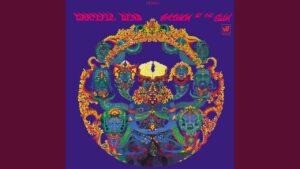
Anthem of the Sun
The band started its second album in the fall of 1967 with producer Dave Hassinger, at studios in Los Angeles and then New York. The band wanted to experiment, and new songs like “That’s It for the Other One” and “Alligator” weren’t working in the studio. Hassinger quit in New York in December, after Weir asked him for a sound like “thick air.” “We found ourselves with enough music on tape for maybe a third of an album,” Lesh said, “so we had to figure out what to do.”
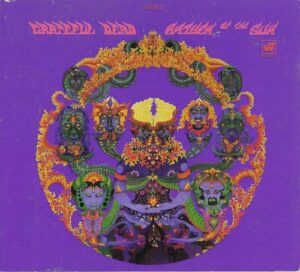
What they did was unlike anything a rock band had tried. They had been taping their shows on the tour, so Garcia, Lesh and engineer Dan Healy mixed the live tapes and the studio tracks together, sometimes layering several performances of the same song on top of each other. Tom Constanten, an old friend of Lesh’s who was still on active duty in the Air Force, added prepared piano and tape effects. Garcia called the result “a collage.” “When we mixed it,” he said, “we mixed it for the hallucinations.” Anthem of the Sun came out on July 18, 1968, credited as produced by the Grateful Dead. Side one is the four-part “That’s It for the Other One,” “New Potato Caboose” and Weir’s “Born Cross-Eyed.” Side two is “Alligator” into “Caution.” It reached number 87.
Out of the Haight
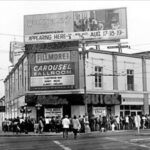
The band left the Haight in the spring of 1968. On March 3 they played a farewell show from flatbed trucks parked on Haight Street, and over the following months the members moved out of 710 Ashbury and scattered around Marin County. For a few months in 1968 the Dead also tried running their own ballroom. With Jefferson Airplane, Big Brother and Quicksilver, they leased the old Carousel Ballroom on Market Street and opened it under band management on February 14. Bill Graham took over the lease that summer and reopened the building as the Fillmore West on July 5. By the fall the band was rehearsing in a warehouse in Novato, where Owsley Stanley’s sound workshop also started building the gear that grew into the Alembic company.
A Seven-Piece Band
In the late summer of 1968, Garcia and Lesh decided Weir and Pigpen weren’t keeping up. According to Blair Jackson, “most of the band fights at this time were about Bobby’s guitar playing,” and Pigpen’s simple organ parts didn’t fit the new music. At a band meeting the two were more or less told they were out of the live band. Pigpen missed a few shows, Weir kept showing up, and within weeks both were back. Kreutzmann later said there was never a real firing. That fall Garcia, Lesh, Hart and Kreutzmann also played a few nights at the Matrix in San Francisco as Mickey and the Hartbeats, a side band where they could jam without anyone else.
The keyboard question was settled in November 1968, when Tom Constanten got out of the Air Force. “As soon as I was out of the clutches of the Air Force, I was on my way to Ohio to play with the band,” he said. His first show was November 23 in Athens, Ohio. TC had studied composition with Luciano Berio and had spent time around Karlheinz Stockhausen and Pierre Boulez in Europe. Onstage he played organ, first a Vox Continental and then Pigpen’s Hammond, while Pigpen moved to congas and harmonica and took his turns out front on “Lovelight” and the blues. The new lineup had seven members, the first time the band had been that big. It also made the band very loud. TC remembered that it was “perennially a problem to amplify the keyboard enough to compete with the guitars,” with Garcia playing through “four Twin Reverbs turned up to 10.”
Aoxomoxoa and Live/Dead
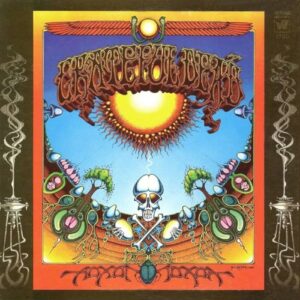
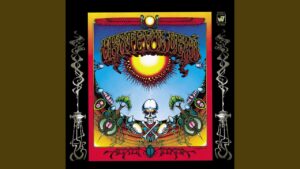
The band produced its third album itself. Aoxomoxoa was begun on an eight-track machine at Pacific Recording in San Mateo, then started over on one of the first 16-track recorders in the country and finished at Pacific High Recording in San Francisco. It took from September 1968 to March 1969 and cost about $180,000, which the band owed Warner Bros. “It was our first adventure with sixteen-track and we tended to put too much on everything,” Garcia said. Kreutzmann remembered “the colossal debt we got ourselves into with the decidedly indulgent making of Aoxomoxoa.” The album, released June 20, 1969, has some of Hunter’s best early songs, including “St. Stephen,” “China Cat Sunflower,” “Dupree’s Diamond Blues,” “Cosmic Charlie” and “Mountains of the Moon,” with TC on harpsichord.
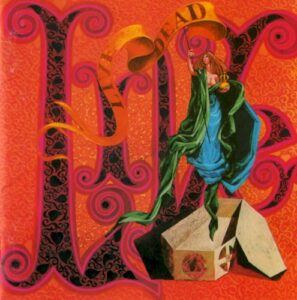
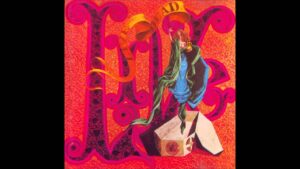
The answer to the debt was a live album. The band brought a 16-track machine to the Avalon Ballroom in January 1969 and to the Fillmore West in late February and early March. Live/Dead, released on November 10, 1969, was one of the first rock albums recorded live on 16 tracks. It opens with a 23-minute “Dark Star” from February 27 that runs straight into “St. Stephen.” “The Eleven” and a fifteen-minute “Turn On Your Love Light” come from the Avalon on January 26. “Death Don’t Have No Mercy,” “Feedback” and the a cappella “And We Bid You Goodnight” come from March 2.
Highlight Shows
The Grateful Dead started taping themselves seriously during this era, and the 1968–69 band is one of the best documented of their early years. These shows trace the arc from Hart’s first months through the Live/Dead run:
- October 22, 1967, Winterland, San Francisco. The first known recording with Mickey Hart. It was released complete with the 50th anniversary edition of Anthem of the Sun.
- November 10, 1967, Shrine Exposition Hall, Los Angeles. One of the shows the band mixed into Anthem of the Sun, with “Viola Lee Blues” and an early “Alligator.” Released on LP in 2016.
- January 17, 1968, Carousel Ballroom, San Francisco. The first known “Dark Star,” “China Cat Sunflower” and “The Eleven,” all in one set.
- February 3, 1968, Crystal Ballroom, Portland. An early “Dark Star > China Cat Sunflower > The Eleven.”
- February 14, 1968, Carousel Ballroom, San Francisco. Opening night of the Carousel under band management, and an Anthem source. Released as Road Trips Vol. 2 No. 2.
- August 21, 1968, Fillmore West, San Francisco. “Dark Star > St. Stephen > The Eleven” as one long suite.
- October 12, 1968, Avalon Ballroom, San Francisco. Played without Pigpen during the shake-up, and one of the most loved tapes of the year.
- January 26, 1969, Avalon Ballroom, San Francisco. Source of Live/Dead‘s “The Eleven” and “Turn On Your Love Light,” and the last known “Clementine.”
- February 27, 1969, Fillmore West, San Francisco. The Live/Dead “Dark Star” and “St. Stephen.” All four nights of the run are on Fillmore West 1969: The Complete Recordings.
- April 26, 1969, Electric Theater, Chicago. A bill shared with the Velvet Underground, released on Dick’s Picks Vol. 26.
- August 16, 1969, Woodstock, Bethel, New York. Rain, shocks from the gear and a set the band itself called terrible.
- November 8, 1969, Fillmore Auditorium, San Francisco. Late-1969 Dead at full strength. Released as Dick’s Picks Vol. 16.
- January 30, 1970, The Warehouse, New Orleans. Tom Constanten’s last show, hours before the bust.
Notable Songs from the Psychedelic Era
“Dark Star” defined the era. After two short verses it could become anything, and by 1969 it was the band’s main way into open improvisation. “China Cat Sunflower,” with a Hunter lyric full of playful images, started as part of the “Dark Star” suite. In September 1969 the band paired it with the old folk song “I Know You Rider,” and the two stayed together for 25 years. “St. Stephen,” with its sing-along chorus and its sudden turns, was the release after “Dark Star.” “The Eleven,” Lesh’s piece in 11/8 time, showed what two drummers who could count were good for. “That’s It for the Other One,” built on a galloping beat and Weir’s lyric about riding the Pranksters’ bus with Neal Cassady, became a jam vehicle the band played for the rest of its career.
Pigpen’s “Turn On Your Lovelight” often ended the night, sometimes running half an hour as he made up verses and pulled the crowd into it. At the other extreme was the Reverend Gary Davis song “Death Don’t Have No Mercy,” a slow blues that Garcia sang as if his life depended on it. By 1969, “Casey Jones” and “Dire Wolf” pointed somewhere else.
Pedal Steel and Country Songs
The next era’s sound was already showing up in 1969. Garcia bought a pedal steel guitar that spring and started practicing it in public. Through the summer he played it behind his old Palo Alto friend John Dawson, who sang country songs at a Menlo Park coffeehouse, along with David Nelson from the bluegrass days. By August they had a band, the New Riders of the Purple Sage, with Hart on drums and Lesh sometimes on bass. In June a one-off country band billed as Bobby Ace and His Cards from the Bottom of the Deck played California Hall, with Weir singing Merle Haggard’s “Mama Tried” and Garcia singing Hunter’s new “Dire Wolf.” That fall Garcia played pedal steel on Crosby, Stills, Nash & Young’s “Teach Your Children.” In return, CSNY helped the Dead with their vocal harmonies.
Hunter and Garcia’s “Dire Wolf” and “Casey Jones” were in the set by June 1969, and “Uncle John’s Band,” “Cumberland Blues” and “Black Peter” followed that fall. A few months later they would fill a whole album.
Woodstock to New Orleans
Business pressure grew through 1969. In the spring the band hired Mickey’s father, Lenny Hart, as its manager. “Here’s a manager that we don’t have to worry about,” Garcia remembered thinking. “He’s an old businessman and he’s Mickey’s father.” The big gigs that year went badly. At Woodstock on August 16, rain had soaked the stage and the band kept getting shocks from the equipment. “There was a great big blue spark about the size of a baseball,” Weir said. “I got lifted off my feet and sent back eight or ten feet to my amplifier.” Garcia later admitted, “we were terrible at Woodstock.” In December the Dead helped organize the free concert at Altamont, where they had reportedly recommended the Hells Angels for security. After an Angel knocked out Jefferson Airplane’s Marty Balin, the band decided not to play. The violence that day later fed Hunter’s lyrics for “New Speedway Boogie.”
Tom Constanten never fully fit. He didn’t take drugs, and Kreutzmann said he played well in rehearsal but “froze” in front of an audience. Unable to hear his own organ over the guitars, TC felt “my own contribution was being limited,” and when he was offered the chance to write music for an off-Broadway show called Tarot, he took it. His last show was January 30, 1970, the opening night of The Warehouse in New Orleans. Early the next morning police raided the band’s hotel on Bourbon Street. The story of what came next, and of the songs that made the band’s name, continues in the Americana Era.