
The Birth of the Grateful Dead
The Grateful Dead did not simply appear fully formed; they evolved from the Warlocks, a covers band that Jerry Garcia and Bob Weir had been playing in since 1964. When another band claimed the Warlocks name, a search for a new identity led them to a dictionary page containing “the grateful dead.” The name, seemingly innocuous at the time, would become synonymous with one of rock music’s most transcendent experiences.
On December 4, 1965, at Ken Kesey’s Acid Test in Muir Beach, California, the Warlocks took the stage as the Grateful Dead for the first time. This wasn’t just a band debut—it was a cultural event. Kesey’s Acid Tests were multimedia happenings where LSD flowed freely (it was still legal), musicians jammed, and the boundary between performer and audience dissolved. The Dead would become the musical core of these events, performing alongside the Grateful Dead’s contemporaneous multimedia experiments.
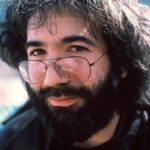
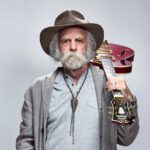
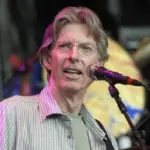
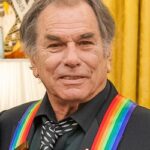
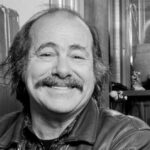
The band’s founding lineup solidified quickly: Jerry Garcia on lead guitar (and occasional harmonica), Bobby Weir on rhythm guitar, Phil Lesh on bass (a former classical composer who took to the electric bass with revolutionary intensity), Bill Kreutzmann on drums, and Ron “Pigpen” McKernan on keyboards and harmonica. Pigpen, who brought the band’s earliest blues orientation, was crucial to establishing their electrified, distorted sound that differentiated them from other Bay Area psychedelic bands.
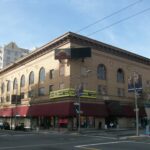
By early 1966, the Dead had secured residency at the Fillmore Auditorium under Bill Graham’s visionary management. They performed regularly at the Fillmore alongside Jefferson Airplane, Big Brother and the Holding Company, and other Bay Area acts. Warner Bros. Records signed them in late 1966, and by spring 1967, they had released their self-titled debut album—a raw, energetic record that captured their blues-based rock sound but would prove a poor representation of what they would become.
This era was characterized by constant musical evolution. The band never played the same setlist twice—a principle that would define their entire career. They drew from blues standards, rock covers, and increasingly original material written by Garcia and the emerging lyricist Robert Hunter. The interplay between Garcia’s fluid lead guitar and Weir’s driving rhythm work created a template for extended improvisation that set them apart from their contemporaries. By mid-1967, they were already exploring longer, more complex arrangements, presaging the sonic experiments to come.
The cultural context cannot be overstated. The Summer of Love was dawning, and the Dead were positioned at the epicenter of San Francisco’s psychedelic revolution. They weren’t just playing music; they were participating in a cultural experiment. The Acid Tests established a template for the Dead’s relationship with their audience—one of mutual experience rather than performer-spectator separation. This fundamental approach would persist for thirty years until Jerry Garcia’s death in 1995.
Lineup & Evolution
Core Lineup (December 1965 – June 1967): Jerry Garcia, Bobby Weir, Phil Lesh, Bill Kreutzmann, and Ron “Pigpen” McKernan formed the foundation. This five-piece configuration established the Dead’s basic sound—a flexible ensemble capable of tight ensemble playing but also capable of extended improvisation. By 1967, Mickey Hart had begun sitting in with the band informally, though he would not officially join until September 1967.
Side Projects & Related Work
During this era, there were few formal side projects, as the members were fully committed to establishing the Dead. However, Jerry Garcia’s involvement with the Acid Tests and Ken Kesey’s multimedia experiments represented a broader cultural engagement that informed the band’s approach. Robert Hunter, though not yet an official member, was working on lyrics and beginning his long collaboration with Garcia. These early songwriting sessions would produce the foundations of the songbook that would emerge in the early 1970s.
Featured Shows from the Formation Era
The shows of the Formation era are challenging to document with precision, as recordings are sparse and setlists were often not recorded. However, certain performances stand out in the band’s lore. The December 1965 Acid Test debut is obviously foundational. The Fillmore Auditorium shows of 1966-67 established the band’s reputation in San Francisco’s emerging psychedelic scene. By June 1967, shows at the Monterey Pop Festival and other Bay Area venues demonstrated a band gaining confidence and beginning to stretch compositionally. These early performances featured plenty of blues covers, rock standards, and increasingly ambitious originals. The sound was raw—Pigpen’s blues harp and keyboards anchored a relatively unpolished but energetic ensemble.
What made these shows special was not technical perfection—the band was still developing—but rather their willingness to explore, to extend, and to abandon structure in favor of collective musical experience. The band was discovering, in real time, that by letting go of fixed song structures, something transcendent could emerge. This principle would define their entire career.
Notable Shows (Representative Performances)
December 4, 1965 | Acid Test, Muir Beach, CA | Grateful Dead’s First Show
January 8, 1966 | Acid Test, Fillmore Auditorium, San Francisco, CA | Earliest circulated live recording and features pure psychedelic chaos
June 16-18, 1966 | Fillmore Auditorium, San Francisco, CA | Early Residency
June 18, 1967 | Monterey Pop Festival, Monterey, CA | The Band Gains Recognition
August 1967 | Fillmore Auditorium Extended Run, San Francisco, CA | Pre-Psychedelic Peak
Notable Releases from the Formation Era
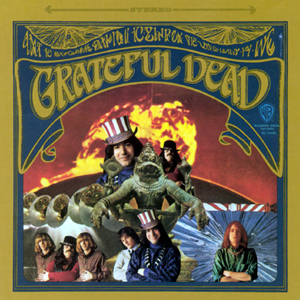
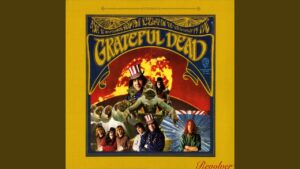
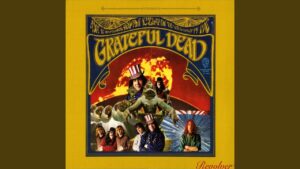
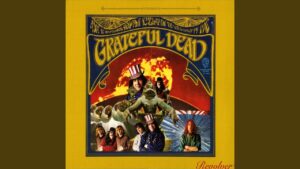
The Grateful Dead’s self-titled debut album, released in spring 1967 by Warner Bros., presents a curious artifact. Produced by Dave Hassinger (who also produced Rolling Stones recordings), it captures the band’s blues-rock foundation but largely omits the experimental direction they were already heading. The album features covers of blues standards and early originals, showcasing Pigpen’s blues orientation and the band’s tight ensemble playing.
Tracks like “The Golden Road (to Unlimited Devotion)” and “Cream Puff War” hint at compositional ambitions beyond blues covers, though the album overall is straightforward blues-rock. The album was largely ignored by contemporary critics and audiences, but in retrospect, it’s valuable precisely because it documents the band before they became the Dead—before extended improvisational passages, before Robert Hunter’s poetic lyrics, before the compositional flowering of the early 1970s. It’s a snapshot of a band in transition.
Featured Releases
A raw blues-rock debut that would be quickly eclipsed by their rapidly evolving sound
Notable Songs from the Formation Era
The Formation era songs were primarily blues covers and early originals that showcased the band’s blues foundation. “Johnny B. Goode,” various blues standards, and early versions of songs like “The Golden Road” and “Morning Dew” formed the core of their sets. However, the most significant development was the emergence of original compositions and the beginning of Garcia and Hunter’s songwriting partnership.
“The Golden Road (to Unlimited Devotion),” often considered the band’s first composed song, is a joyful, nearly nonsensical romp that captured the acid-fueled optimism of the Haight-Ashbury scene. It lacked the poetic sophistication that Hunter would later bring, but it demonstrated that the Dead could write originals. “Cream Puff War” similarly showed compositional ambition, though these early efforts would be quickly surpassed by the songs that would emerge in 1969-1971.
What made these songs special in the Formation era was their function in the broader Acid Test experience. They weren’t meant to be radio hits or even particularly polished compositions. They were vehicles for collective experience, launching pads for extended improvisations that could stretch across sets. The emphasis on blues covers—performed with intensity and extended improvisation—proved that the Dead understood a fundamental principle: any song, no matter how simple or familiar, could become a vehicle for something transcendent if played with intention and openness.
Standout Songs
The Golden Road (to Unlimited Devotion) an early original Garcia/Hunter blues-influenced tune.
Cream Puff War and early componsitiaonly ambitious Garcia song.
Johnny B. Goode, a Chuck Berry cover to show their standard blues rock foundation.
Viola Lee Blues, a traditional blues song they put their fingerprint on.
Beat it on Down the Line, a folk song they played back in Mother McCree days and continued through Warlocks and the Dead.
Monkey & the Engineer, another folk song they made their own.
Final Thoughts & Summary
The Formation Era (December 1965 – June 1967) represents the Grateful Dead in their pure genesis. They were not yet the legendary improvisational machine they would become, not yet the keepers of a sophisticated songbook, not yet the band with a cult following numbered in hundreds of thousands. They were simply a group of young musicians from the Bay Area who discovered, through the Acid Tests and the emerging psychedelic scene, that electric music could be a vehicle for collective transcendence.
What emerged during this period—the principle of never playing the same setlist twice, the emphasis on group interplay over individual showmanship, the willingness to abandon structure in pursuit of musical truth—would become the Dead’s defining characteristics. The Formation era established not just a band, but a philosophy. By June 1967, as psychedelic rock was reaching its commercial peak and the Grateful Dead were about to sign to Warner Bros., the essential DNA of the band was already in place. Everything that would follow—the studio experiments, the legendary shows, the marathon jam sessions—grew from seeds planted at Ken Kesey’s Acid Tests in 1965.