
Two Keyboards
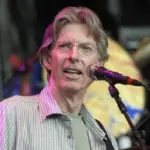
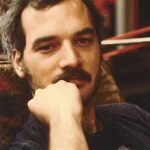
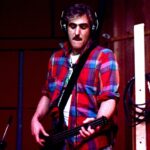
Brent Mydland died on July 26, 1990, and the Dead had a fall tour booked. The band auditioned several keyboard players, including Ian McLagan of the Faces, Pete Sears and T Lavitz, and chose Vince Welnick, in part because his voice could reach the high harmonies. Welnick had played keyboards in The Tubes, the theatrical San Francisco band behind “She’s a Beauty,” and then in Todd Rundgren’s touring band. “I kind of went in with the idea that I’d try out and see if they wanted to hire me,” he said.
His first show was September 7, 1990, at the Richfield Coliseum outside Cleveland. “I started worrying about whether or not the fans were gonna like me,” Welnick admitted. When fans held up “Yo, Vinnie!” signs, he said, “I felt like I had really been accepted into the family.”
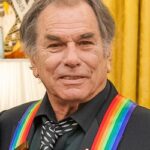
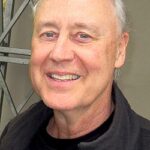
Eight days later, on September 15 at Madison Square Garden, Bruce Hornsby played his first show as a member of the band. He’d had a No. 1 hit with “The Way It Is” in 1986 and won the Grammy for Best New Artist. He first sat in with the Dead on accordion in Ohio in 1988, and he played with them again at the 1988 rainforest benefit and in Raleigh two weeks before Mydland died. He never formally joined. With his own career and band, he played with the Dead when he could, and he played almost every show for the next year and a half.
The band now had a grand piano and accordion from Hornsby, and synthesizers and organ from Welnick. JamBase described it this way: “Gone were Mydland’s signature organ blasts and in its place were the gorgeous grand piano work of Hornsby and the synth swirls of Welnick.” Lesh later wrote that he thought the band should have taken time off to grieve that fall, but the overhead of the Dead’s organization wouldn’t allow it.
The Biggest Band in America
The 1990–91 band stretched out. “Dark Star,” revived in 1989, stayed in the rotation, often in the middle of second sets. Branford Marsalis sat in again at Oakland on New Year’s Eve 1990 and at Madison Square Garden in September 1991. That fall the band’s promoter and longtime ally Bill Graham died in a helicopter crash, and on November 3 the Dead were among the acts at a free memorial concert for him at the Polo Fields in Golden Gate Park.
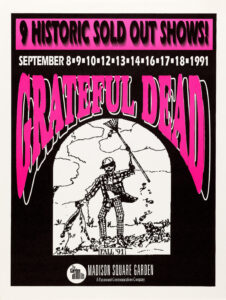
The audience kept growing. Pollstar ranked the Grateful Dead the top-grossing touring act in America in 1991 and again in 1993, and in the top five every year from 1987 to 1995. The September 1991 run of nine shows at Madison Square Garden sold 163,932 tickets, a record for the band.
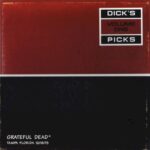
The band’s vault opened too. One from the Vault (1991), a 1975 show at the Great American Music Hall, was the first complete concert the Dead released. Infrared Roses (1991) was a collage of Drums and Space segments assembled by Bob Bralove, with titles by Robert Hunter and cover art by Garcia. In 1993 the vault archivist Dick Latvala began the Dick’s Picks series.
New Songs
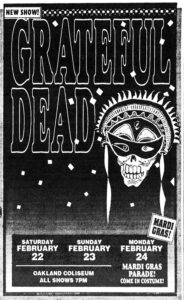
In February 1992 the band rehearsed at its Club Front studio in San Rafael and debuted a batch of new songs at the Oakland Coliseum. Garcia and Hunter’s “So Many Roads” and Lesh and Hunter’s “Wave to the Wind” debuted on February 22. Welnick’s “Way to Go Home” and “Corrina,” by Weir, Hart and Hunter, followed two nights later.
Hornsby left the band a month later. His last show as a member was March 24, 1992, in Auburn Hills, Michigan. He had newborn twin sons and his own records to make. “In the end, I said it was time for Vince to be the guy, time for me to go,” he remembered. He came back to sit in many times through June 1995.
Featured Songs
Garcia’s Illness
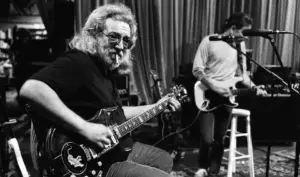
In August 1992, after a run of Jerry Garcia Band shows, Garcia collapsed from exhaustion, with heart and lung problems. The band canceled 23 concerts, including six nights each at Madison Square Garden and the Boston Garden. Blair Jackson noted there was “no coma this time, and it didn’t seem to be life-threatening.” Garcia changed his diet, exercised and stopped using drugs for a time. When the Dead came back in December 1992, he had lost a lot of weight. At Compton Terrace in Arizona on December 6, the band brought back “Here Comes Sunshine,” unplayed since 1974.
The next February in Oakland the band debuted Garcia and Hunter’s “Lazy River Road” and “Liberty” and Weir’s “Eternity,” written with bassist Rob Wasserman and Willie Dixon, on February 21. The next night came “Days Between,” a long, slow look back at the 1960s that many fans consider Garcia and Hunter’s last great song. The band recorded the new songs at Club Front in 1992 and 1993 and planned a studio album, but it was never finished. “We had just about finished the basics when Jerry checked out,” Welnick said later. Live versions finally came out in 2019 on Ready or Not.
The Hall of Fame
In January 1994 the Grateful Dead was inducted into the Rock and Roll Hall of Fame, with Hornsby giving the induction speech. Garcia didn’t attend, and the band brought a life-size cardboard cutout of him onstage instead. Robert Hunter was inducted with them. That year Lesh added his own songs, “If the Shoe Fits” and “Childhood’s End,” and Welnick and Hunter’s “Samba in the Rain” debuted in June. The band grossed $52.4 million in 1994, its best year ever, and still ranked only fifth. Garcia’s line of neckties, launched in 1992, was selling in stores across the country.
Garcia was declining again. He was using drugs again, his playing was uneven and he sometimes struggled with lyrics onstage. In March 1995 Hornsby was invited back for a show in Charlotte, he said, “’cause Jerry needs a lift.”
The Summer of 1995
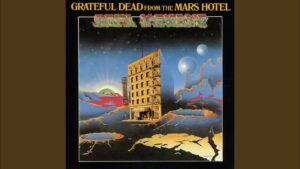
On March 19, 1995, at the Spectrum in Philadelphia, the band played Phil Lesh’s “Unbroken Chain,” from 1974’s From the Mars Hotel, for the first time ever. Lesh sang it, after more than 20 years in which fans had asked for it. That spring Weir started a new band with Wasserman, which became RatDog.
The summer tour went badly from the start. At RFK Stadium in Washington in June, lightning struck fans outside the show. On July 2 at Deer Creek Music Center in Indiana, thousands of people without tickets crashed the gates during “Desolation Row,” police used tear gas, and the next night’s show was canceled. The band had also received a death threat against Garcia, and played with the house lights on one night as a precaution. On July 5 a wooden deck collapsed at a campground near St. Louis where fans were staying, and more than 100 people were hurt.
The band sent fans a letter. “A few more scenes like Sunday night, and we’ll quite simply be unable to play,” it said. “The spirit of the Grateful Dead is at stake, and we’ll do what we have to do to protect it.”
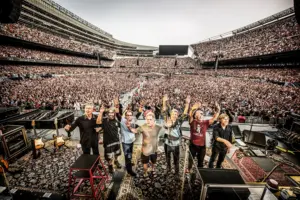
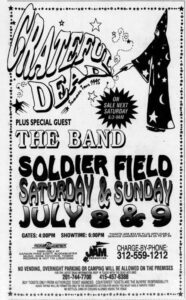
The tour ended with two nights at Soldier Field in Chicago on July 8 and 9, with The Band opening. On July 9 the Dead opened with “Touch of Grey,” played “So Many Roads” early in the second set and went from Space into “Unbroken Chain.” For the encore Garcia sang “Black Muddy River,” and Lesh sang “Box of Rain.” It was the last Grateful Dead show.
Featured Shows
-
Chicago – July 9, 1995
-
Madison Square Garden – September 10, 1991
-
Burlington – September 7, 1990
-
Richfield Coliseum – September 7, 1990
-
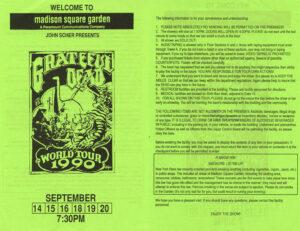
Madison Square Garden – September 15, 1990
-
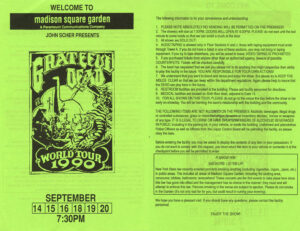
Madison Square Garden – September 20, 1990
-
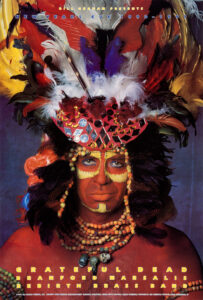
Oakland – December 31, 1990
-
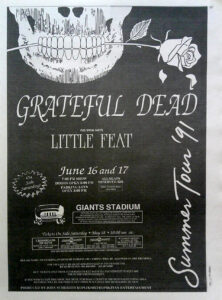
Giants Stadium – June 17, 1991
-
Oakland – February 22, 1992
August 9, 1995
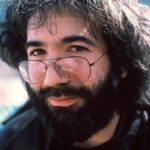
Garcia went into the Betty Ford Center in July, and in August he checked into Serenity Knolls, a treatment center in Forest Knolls, in Marin County. On the morning of August 9, 1995, eight days after his 53rd birthday, he died there of a heart attack.
Tributes came from well beyond the Deadhead world. “There’s no way to measure his greatness or magnitude as a person or as a player,” Bob Dylan said. Mickey Hart remembered, “It felt like someone had hit me with a hammer.” San Francisco’s mayor ordered a tie-dye flag flown at half-staff over City Hall, and on August 13 about 25,000 people gathered at the Polo Fields in Golden Gate Park for a public memorial.
On December 7 the surviving members met, and the next day they announced that they had come to the conclusion that “the ‘long strange trip’ of the uniquely wonderful beast known as the Grateful Dead is over.” They told fans that “the music, the values and the spirit of this marvelous shared journey endure.” The Grateful Dead was over, but their musical careers were not. What the musicians did next is the next era.