
Peak Songwriting & Touring – The Classic Years
Following Pigpen McKernan’s death in March 1973, the Grateful Dead faced a crossroads. Pigpen had been a founding member, central to the band’s identity, and the repository of their blues tradition. His passing could have derailed the band entirely. Instead, it marked a transition to a new phase of maturity and sophistication. The band, no longer tethered to the blues-based traditions Pigpen represented, embraced a more expansive musical palette.
Keith Godchaux’s full integration as the sole keyboardist proved transformative. With Pigpen gone, Godchaux could pursue his soulful, groove-oriented approach to keyboards without compromise. The band worked around Keith’s musical strengths: his ability to drive grooves, his emotional warmth, his classical training which allowed him to understand complex harmonic structures.
The songwriting output during this period was extraordinary. Robert Hunter and Jerry Garcia created some of their finest compositions: “He’s Gone,” “Scars of Time,” “Wharf Rat,” “Dancing in the Street,” “Ramrod,” and many others. Weir and Hunter collaborated on songs like “Cassidy” and “It Must Have Been the Roses.” The band had never been more creatively prolific.
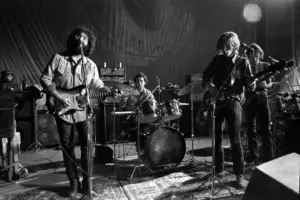
Sonically, the band achieved a new level of cohesion. The interplay between Garcia’s lead guitar work and Weir’s increasingly sophisticated rhythm guitar playing became legendary. Lesh’s bass lines grew more melodic and interesting, frequently carrying counter-melodies rather than simple root notes. Kreutzmann’s drumming, no longer having to compete with or complement Mickey Hart’s polyrhythms, settled into a groove that was both solid and flexible.
Perhaps most significantly, the band developed a new relationship with their audience. The “Deadheads” were no longer a cult—they were an identifiable community with its own culture, ethics, and values. The band’s willingness to allow recordings and tapes of shows to circulate created a network of communication and relationship among fans that preceded internet culture by decades. A show wasn’t just a performance; it was a documented event that would be shared, analyzed, and circulated throughout the Deadhead community.
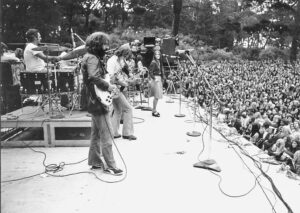
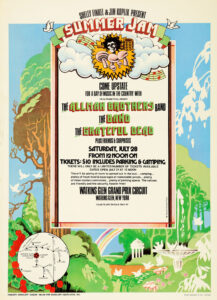
The summer of 1973 saw the Watkins Glen Summer Jam—a festival headlined by the Grateful Dead, the Allman Brothers Band, and the Marshall Tucker Band. Estimated at 600,000 attendees, it remains one of the largest outdoor rock concerts ever held. The Dead’s performance captured on tape demonstrates a band firing on all cylinders, delivering a set that showcased their compositional depth and improvisational prowess.
The era concluded with the five farewell shows at Winterland in San Francisco in late November 1974. These shows, recorded and later released as “From the Mars Hotel,” represented a conscious acknowledgement that the band needed time away from touring. The intensity of constant touring, combined with increasing drug use and personal toll, had begun to take its price. The band was at the top of their game artistically, but personally and spiritually, they recognized the need for rest.
Lineup & Evolution
This five-piece configuration represented the band at peak musical cohesion. With Mickey Hart absent (he would not return until 1976) and Pigpen departed, the band had a more clear, focused sound. There were no contradicting musical philosophies, no competing rhythmic sensibilities—just five musicians entirely committed to the same artistic vision.
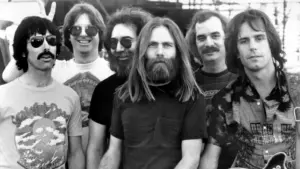
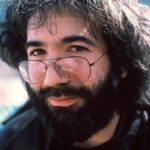
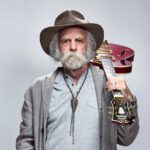
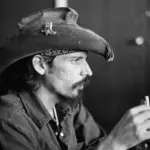
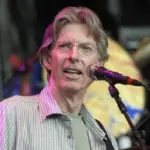
Core Lineup (June 1972 – November 1974): Jerry Garcia (lead guitar), Bobby Weir (rhythm guitar), Phil Lesh (bass), Bill Kreutzmann (drums), and Keith Godchaux (keyboards). Donna Jean Godchaux joined as percussionist and vocalist in March 1972, though she gradually became more prominent as the era progressed.
Side Projects & Related Work
During the Classic Years, side projects increased somewhat as the band members explored related musical interests. Jerry Garcia recorded his second solo album, “Garcia” (1974), continuing the country-influenced acoustic work of his first solo outing. Bobby Weir began exploring musical directions outside the Dead, though these would not fully materialize until later periods. Phil Lesh’s bass playing on Dead recordings became increasingly sophisticated, frequently functioning as a leading voice in the band’s musical texture rather than a supporting role.
Robert Hunter’s songwriting flourished as a central focus of his creative life during this period. While most of his output appeared on Grateful Dead recordings, his work during the Classic Years represents the peak of his collaborative songwriting with Jerry Garcia. The sophistication of his lyrics, the maturity of his thematic concerns, and the craft of his verse structures all reached peak development during this era.
Featured Shows from the Classic Years
The Classic Years produced some of the most legendary shows in Grateful Dead history. The May 23-26, 1972 Lyceum shows in London, technically straddling the Acoustic Turn and Classic Years, captured a band at the height of musicianship. However, the truly classic shows from this era include performances at Winterland, the Fillmore East, and most notably, the summer festivals.
The May 1973 Lyceum Theatre shows represented the band at another peak. Released decades later in complete form, these shows demonstrated a band capable of sustaining complex, emotionally intelligent musical narratives across entire sets. The interplay between Garcia and Weir, the sophistication of Lesh’s bass lines, Godchaux’s warm keyboard contributions, and Kreutzmann’s steady, swinging drumming all combined to create some of the finest documented Dead performances.
The Watkins Glen Summer Jam in July 1973 showcased the Dead before a massive audience. The show, recorded and eventually released, remains a landmark performance—a band proving they could move a crowd of 600,000 people while maintaining musical integrity and sophistication.
The Winterland shows in November 1974 concluded the era on a high note. Recorded professionally, these five nights captured a band consciously saying goodbye to an era. The performances were emotional, powerful, and—as it turned out—they would be among the last shows before the long hiatus that would reshape the Dead forever.
Featured Shows
Notable Releases from the Classic Years
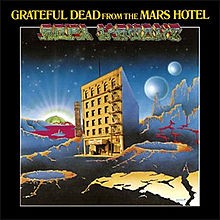
“From the Mars Hotel” (June 1974) stands among the band’s finest studio albums. Recorded at the Record Plant in Los Angeles and featuring some of the strongest material they had ever created, “From the Mars Hotel” showcased the fully mature version of the band. The album’s production, handled by Spencer Dryden and the Dead themselves, captured the band playing live-style but with the flexibility of studio recording. The result was a sound that was both immediate and artful, capturing the Dead’s essence without the self-conscious experimentation that had characterized some earlier work.
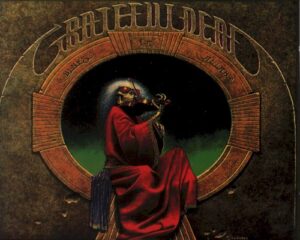
“Blues for Allah” (September 1975), technically released after the hiatus began, would be the final studio album of the era. Recorded during the 1974-1975 period, the album features “Franklin’s Tower” and “Help on the Way/Slipknot!,” both of which would become concert favorites. The album demonstrated that even as the band stepped away from touring, their songwriting and creative drive remained strong.
Notable Songs from the Classic Years
“He’s Gone,” debuting in early 1973, became one of the Dead’s most powerful compositions. With lyrics dealing with loss and absence, paired with Garcia’s soaring lead lines and Godchaux’s soulful keyboard work, the song became a showcase for the band’s emotional maturity. In concert, “He’s Gone” frequently developed into extended explorations of grief and transcendence.
“Wharf Rat,” a blues-based composition about addiction and redemption, showcased a more introspective Dead. Featuring Weir on lead vocals and Garcia and Lesh creating a musical framework that was simultaneously bluesy and sophisticated, the song addressed serious subject matter with artistic gravity. It became one of the Dead’s most emotionally direct songs.
“Cassidy,” one of Weir and Hunter’s finest collaborations, became another Dead masterpiece. The song’s chorus (“Honey, it’s not dark yet…”) conveyed a message of hope and resilience that resonated throughout the Deadhead community. In concert, it frequently developed into extended passages of collective beauty.
Featured Songs
Final Thoughts & Summary
The Classic Years (June 1972 – November 1974) represent the Grateful Dead at their most artistically mature and commercially viable. The songwriting was sophisticated, the performances were transcendent, and the community around them had grown to encompass hundreds of thousands of devoted fans. The band had evolved from psychedelic curiosity to something far more significant: an American musical institution.
Yet the very success and intensity of these years took its toll. The constant touring, the increasing drug use among band members, the personal strain of fame and expectation—all of these contributed to the band’s recognition that they needed a break. The hiatus that followed, though it seemed indefinite at the time, would prove restorative. When the band returned in 1976, they would be changed, but the foundations laid during the Classic Years would endure. The songs written during this era remain the core of the Dead’s live repertoire decades later, a testament to the artistic achievement of this remarkable period.