
Phil Lesh came to rock and roll from an unlikely direction. His father, an amateur pianist, started him on violin at eight, and in his teens he switched to trumpet. He fell in love with symphonic and avant-garde music, especially Beethoven, Mahler, Bach and Charles Ives, and decided early that he wanted to be a composer. He played trumpet and wrote arrangements for the big band at the College of San Mateo. At UC Berkeley and Mills College he studied composition with Luciano Berio, alongside future composers Steve Reich and John Chowning, and met Tom Constanten, a later Dead keyboardist. He also followed free jazz and the music of John Coltrane.
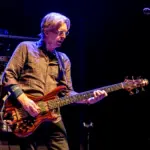
While volunteering as a recording engineer at KPFA radio in Berkeley, Lesh met Jerry Garcia. In 1965, after hearing the Warlocks at Magoo’s Pizza Parlor, he was invited to replace their bassist, even though he had never played bass. He learned on the job, and that lack of training became his strength. Rather than laying down a conventional root-note foundation, Lesh played the bass as a lead voice. He wove contrapuntal lines around Garcia and Weir, pushed the band’s harmonies into new territory, and often steered its collective improvisations. His approach, rooted in Bach’s counterpoint and the structure of classical music, became one of the defining sounds of the Grateful Dead and of psychedelic rock in general.
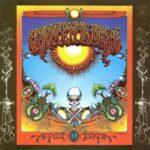
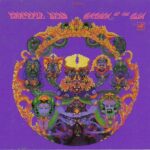
Lesh was also a key conceptual force. He pushed the band toward long-form experimental pieces such as “Dark Star,” “The Other One” and the avant-garde collage of Anthem of the Sun, and he helped develop the band’s pioneering sound systems. He wrote and sang some of the band’s most loved songs, most famously “Box of Rain,” written with Robert Hunter for his dying father, as well as “Unbroken Chain” and “Pride of Cucamonga.”
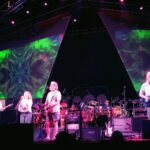
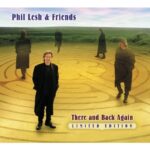
After the Dead ended in 1995, Lesh survived a liver transplant in 1998 and spent the rest of his life encouraging organ donation from the stage. He formed Phil Lesh & Friends, a rotating ensemble that brought in players from the jam-band generation and reinterpreted the Dead’s music with fresh arrangements. He co-led Furthur with Bob Weir from 2009 to 2014 and in 2012 opened Terrapin Crossroads in San Rafael, a music venue and community hub. His 2005 memoir, Searching for the Sound, describes his idea of music as a shared, almost spiritual pursuit that the audience helps create.
Lesh was inducted into the Rock and Roll Hall of Fame in 1994 and kept performing into his eighties. He died in October 2024 at 84. He is remembered as one of rock’s most original bassists and the Dead’s most adventurous musical thinker.