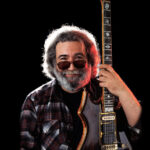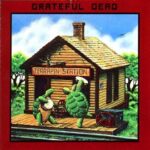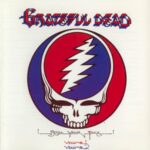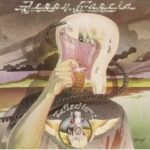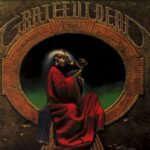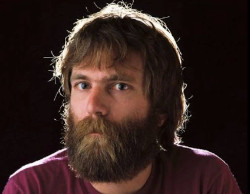

Jerome John Garcia grew up in San Francisco in a musical family. His father was a bandleader and clarinetist, and his grandmother listened to the Grand Ole Opry, which gave him his first taste of country music. Two early events became part of his legend: at four he lost most of his right middle finger in a wood-chopping accident, and a year later his father drowned. At fifteen he talked his mother into trading an accordion for an electric guitar, and he began copying Chuck Berry and the rhythm-and-blues he heard on the radio. He also studied painting briefly at the San Francisco Art Institute, and visual art stayed with him all his life.
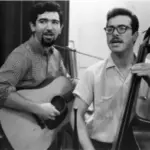
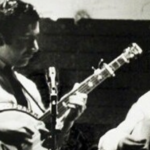
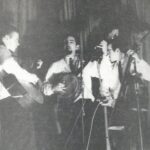
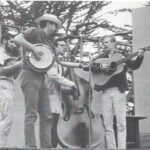
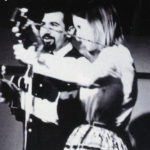
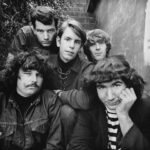
After a short, unhappy stint in the Army in 1960, Garcia settled into the Palo Alto folk scene, where he met Robert Hunter, the lyricist who became his lifelong writing partner. Over the next four years he played in a series of folk, old-time and bluegrass groups, taught himself Earl Scruggs’s three-finger banjo style, and made a pilgrimage east to hear Bill Monroe. The discipline of bluegrass, with its long, precisely phrased solos, shaped the melodic, flowing lines that later became his electric sound. In 1964 a jug band with Bob Weir and Ron “Pigpen” McKernan led to the Warlocks, and in late 1965 to the Grateful Dead.
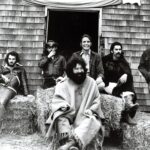
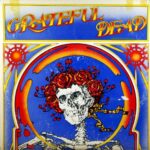
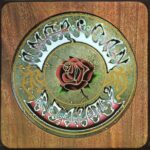
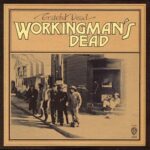
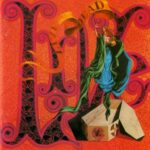
As the Dead’s lead guitarist and one of its main singers, Garcia became the reluctant public face of the San Francisco scene. His playing drew on bluegrass, blues, jazz and country. It was conversational, lyrical and endlessly curious, and it thrived in the band’s open-ended improvisations on pieces like “Dark Star.” With Hunter he wrote much of the Dead’s core songbook, including “Uncle John’s Band,” “Friend of the Devil,” “Ripple,” “Sugaree,” “Scarlet Begonias” and “Touch of Grey,” the band’s only Top 10 hit, in 1987.
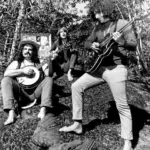
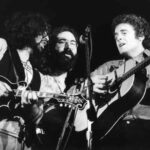
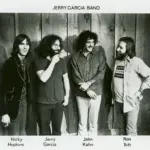
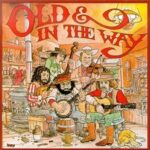
Garcia almost never stopped playing. Outside the Dead he played pedal steel with the New Riders of the Purple Sage and on Crosby, Stills, Nash & Young’s “Teach Your Children.” He jammed with Merl Saunders, returned to bluegrass in Old & In the Way, led the Jerry Garcia Band for two decades, and recorded acoustic projects with mandolinist David Grisman. He described his role as serving the music rather than leading it, and he treated each night as an experiment whose outcome no one could predict.
His later years were marked by serious health problems, including a diabetic coma in 1986. He died of a heart attack in August 1995, a week after his 53rd birthday, and the Grateful Dead retired the name soon after. Garcia was inducted into the Rock and Roll Hall of Fame with the band in 1994. He remains one of rock’s most beloved guitarists, and a model for the improvising, community-centered musicians who followed him.