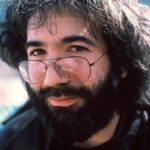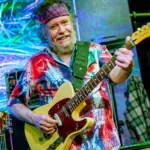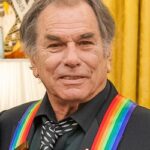

The New Riders of the Purple Sage began in the spring of 1969, when Jerry Garcia went looking for a place to practice his new instrument. He had bought a pedal steel guitar in April 1969, after hearing Sneaky Pete Kleinow play one with the Flying Burrito Brothers. On Wednesday nights he began sitting in with John “Marmaduke” Dawson, a singer-songwriter who was playing country covers and his own songs at The Underground, a beer-and-pizza hofbrau on El Camino Real in Menlo Park. The earliest confirmed duo set is May 14, 1969, from an Owsley Stanley tape, and Garcia probably started sitting in a week earlier.
Dawson’s songs drew on Bakersfield country such as Buck Owens and Merle Haggard, but with psychedelic edges, and they fit the country-rock moment that the Byrds, the Band and the Burritos were creating. By June the duo had become a band. Garcia’s old bluegrass partner David Nelson joined on lead guitar, and Mickey Hart took the drums. Bass was a revolving seat: sound engineer Bob Matthews played most of the 1969 shows, Phil Lesh sat in during the fall and played on the November 1969 demos later released as Before Time Began, and Robert Hunter briefly rehearsed on bass in early 1970. The band played its first proper set, unbilled and somewhat ragged, on July 16, 1969, at a Hells Angels benefit at Longshoreman’s Hall in San Francisco. The name, a nod to the 1940s western swing group Riders of the Purple Sage, first appeared in print in the San Francisco Chronicle on August 6, 1969, for a run at the Matrix. Bob Weir often sat in as “Bobby Ace” on country duets.
In spring 1970, Dave Torbert, Nelson’s bandmate from the New Delhi River Band, took over on bass, and the New Riders became part of the Grateful Dead’s touring show. From May 1970, “An Evening with the Grateful Dead” opened with an acoustic Dead set, followed by the New Riders and then the electric Dead. Garcia played all three sets, and Hart often played two. Former Jefferson Airplane drummer Spencer Dryden replaced Hart in December 1970.
Columbia Records signed the band, and their self-titled debut album came out in 1971, entirely written by Dawson and with Garcia’s pedal steel all over it. By then the New Riders wanted to be a band in their own right, and Garcia was stretched thin. His last show as a member was at the Ohio Theatre in Columbus on October 31, 1971. Buddy Cage, from Ian & Sylvia’s Great Speckled Bird, took over pedal steel that November.
The Dawson–Nelson–Torbert–Dryden–Cage lineup was the band’s classic one, and the most successful. Powerglide (1972) and Gypsy Cowboy (1972) followed. The Adventures of Panama Red (1973) included Nelson’s version of Peter Rowan’s “Panama Red,” which became an FM radio staple, and the album went gold. Lineup changes began in 1974, when Torbert left to form Kingfish and was replaced by former Byrd Skip Battin, followed in 1976 by Stephen A. Love. Dryden stopped playing to manage the band in 1977, Patrick Shanahan took over the drums, and Allen Kemp joined in 1978. The band moved from Columbia to MCA and then A&M, but sales fell as country rock went mainstream. In 1982 Nelson and Cage left, and Dawson was the only original member remaining.
Dawson kept the name going for another fifteen years with multi-instrumentalist Rusty Gauthier and a rotating group of players. The music leaned more toward bluegrass, and the band recorded mostly for Relix Records. He retired in 1997 and moved to Mexico to teach English.
In late 2005, shortly after Dryden’s death, Nelson and Cage revived the New Riders with guitarist Michael Falzarano, bassist Ronnie Penque and drummer Johnny Markowski. The new band recorded Where I Come From (2009), which included new songs co-written with Robert Hunter, and 17 Pine Avenue (2012). Dawson died in Mexico on July 21, 2009. The band stopped performing around 2017, and Cage’s death on February 5, 2020 effectively ended it.
The New Riders were the first Grateful Dead side project to become a career of its own, and for a while they were a full part of the Dead’s world. They gave Garcia a place to work out his pedal steel playing, which shows up on Workingman’s Dead, American Beauty and Crosby, Stills, Nash & Young’s “Teach Your Children.” They also helped put the Dead’s 1970 return to American roots music on stage.